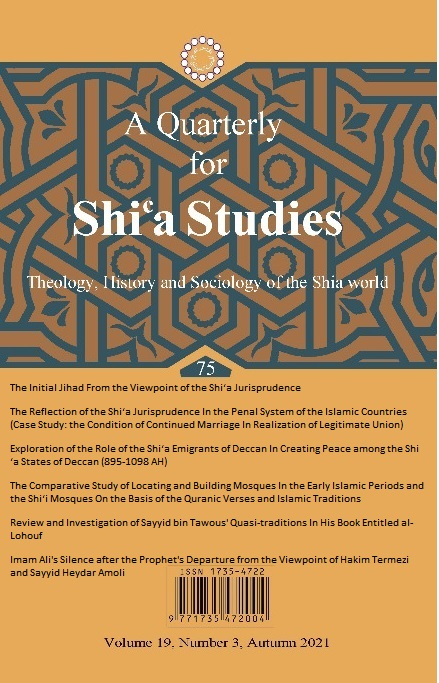
Concomitant with the formation of the Shiite states of Adel-Shahids, Nezam-Shahids and Qutb-Shahids, the emigration of the Shiite Iranians to the South India became more serious. The Shiite rulers of Deccan needed the Iranian emigrants for fixation of the Shiite governance and strengthening the foundations and promotion of Shiism as well as defending it against the non-Shiite states. This emigration caused evolutions in regard with political and social activities in line with religious and foreign policies of those states, and made the South India a safe area for inhabitants of those regions. The present article uses a descriptive-analytical approach based on library studies to explore and analyze the Iranian emigrant Shiites' measures in creating peace among the Shiite states of Deccan and answers the following questions: "what was the purpose of the Iranian Shiites in creating peace among the Shiite states of Deccan?" The findings of the study show that elites among the Iranian emigrant Shiites – with their perception of the special conditions and probable risks – served as the emissaries of peace before other Shiite rulers of Deccan to unite the Shiite states against the non-Shiite states, especially the Sunnite ones. In this way, by creating a united power and forming a defensive shield, they prevented lengthy wars. The important achievement of this peace was that people in the regions under the rule of the Shiite states of Deccan enjoyed social security. Besides, by performing this mission, the Iranians were seeking to fix and strengthen the Shiite state on the basis of the Shiite doctrines, so that they may prevent the collapse of the Shiite rule in Deccan.
ارشاد، فرهنگ (1365)، مهاجرت تاریخی ایرانیان به هند قرن ۸ تا ۱۸ میلادی، تهران، مؤسسه مطالعات و تحقیقات فرهنگی.
اطهررضوی، سید عباس (1376)، شیعه در هند، قم، مرکز مطالعات و تحقیقات اسلامی وابسته به دفتر تبلیغات اسلامی حوزه علمیه قم.
ــــــــــــــــــــــــــ (1396)، تاریخ اجتماعی - فکری شیعه اثناعشری در هند، ترجمه منصور معتمدی، قم، پژوهشگاه علوم و فرهنگ اسلامی وابسته به دفتر تبلیغات اسلامی حوزه علمیه قم.
افوشتهای نطنزی، محمود بن هدایتالله (1350)، نقاوة الآثار فی ذکر الاخیار فی تاریخ الصفویه، بهکوشش احسان اشراقی، تهران، بنگاه ترجمه و نشر کتاب.
بسطامی، علی بن طیفور (بیتا)، حدائق السلاطین فی کلام الخواتین، تصحیح شریف النساء انصاری، حیدرآباد، دانشگاه عثمانیه.
جعفریان، رسول (1387)، اطلس شیعه، تهران، سازمان جغرافیایی نیروهای مسلح.
حجتی، حمیده (1375)، دانشنامه ادب فارسی، تهران، وزارت فرهنگ و ارشاد اسلامی.
خانزمان خان، غلامحسینخان (1377)، تاریخ آصفجاهیان / گلزار آصفیه، به اهتمام محمدمهدی توسلی، اسلامآباد، مرکز تحقیقات فارسی ایران و پاکستان.
خطیبی، ابوالفضل (1377)، «احمد نظام شاه»، در دانشنامه بزرگ اسلامی، زیرنظر سید کاظم موسوی بجنوردی، تهران، دائرةالمعارف بزرگ اسلامی.
ساعدی شیرازی، میرزا نظامالدین احمد ابن عبدالله (1961)، حدیقة السلاطین، تصحیح و تحشیه سید علیاصغر بلگرامی، حیدرآباد دکن.
سید حسین زاده، هدی (1395)، «اطلاعات حکمت و معرفت»، ماهنامه فلسفه و کلام، سال یازدهم، ش8.
خافیخان نظامالملکی، محمد هاشمخان، (1925)، منتخب اللباب در احوال سلاطین ممالک دکن، گجرات و خاندیش، تصحیح سر ولزلی هیگ، به اهتمام انجمن آسیایی بنگاله، کلکته، بینا.
مقیم هروی، خواجه نظام الدین احمد بن محمد (1927)، طبقات اکبری، به کوشش محمد هدایت حسین، کلکته، انجمن آسیایی بنگال.
منشی قادرخان (1306 ق)، تاریخ قطبشاهی، چاپ سنگی، بهاهتمام سید برهانالدین احمد، حیدرآباد دکن.
میرعالم، میرزا ابوالقاسم رضیالدین بن نورالدین (1309 ق)، حدیقة العالم، بهاهتمام سید عبداللطیف شیرازی، حیدرآباد دکن.
منشی، اسکندر بیگ (1377)، تاریخ عالم آرای عباسی، بهکوشش محمد اسماعیل رضوانی، تهران، دنیای کتاب.
ناشناس، سلطان محمد قطبشاه، دیوان سلطان محمد قطبشاه تحت عنوان دیوان ظل الله، نسخه خطی ش۲۴۸۵، تهران، کتابخانه مجلس شورای اسلامی.
هالیستر، جان نورمن (1373)، تشیع در هند، ترجمه آذرمیدخت مشایخ فریدنی، تهران، نشر دانشگاهی.
هندوشاه، محمد بن قاسم (1301 ق)، تاریخ فرشته / گلشن ابراهیمی، چاپ سنگی، بیجا.
ــــــــــــــــــــــــــ (1393)، تاریخ فرشته، تصحیح، تعلیق، توضیح و اضافات محمدرضا نصیری، تهران، آثار و مفاخر فرهنگی.
Reza Alikhan (1986), Hyderabad a city in history.
Sha roco (1929), Golconda and the qutb shahs, Hyderabad.
Sherwani, Haroon Khan (1973), “The Bahmanis", History of the..., Hyderabad.
Siddiqui, Abdul Majeed (1956), History of Golcunda, Hyderabad.
Mousavi,S H and chelongar,M A . (2021). Exploration of the Role of the Shi‘a Emigrants of Deccan In Creating Peace among the Shi‘a States of Deccan (895-1098 AH). Shi'ite Studies, 19(75), 53-86. doi: 10.22034/shistu.2022.525225.1999
MLA
Mousavi,S H , and chelongar,M A . "Exploration of the Role of the Shi‘a Emigrants of Deccan In Creating Peace among the Shi‘a States of Deccan (895-1098 AH)", Shi'ite Studies, 19, 75, 2021, 53-86. doi: 10.22034/shistu.2022.525225.1999
HARVARD
Mousavi S H, chelongar M A. (2021). 'Exploration of the Role of the Shi‘a Emigrants of Deccan In Creating Peace among the Shi‘a States of Deccan (895-1098 AH)', Shi'ite Studies, 19(75), pp. 53-86. doi: 10.22034/shistu.2022.525225.1999
CHICAGO
S H Mousavi and M A chelongar, "Exploration of the Role of the Shi‘a Emigrants of Deccan In Creating Peace among the Shi‘a States of Deccan (895-1098 AH)," Shi'ite Studies, 19 75 (2021): 53-86, doi: 10.22034/shistu.2022.525225.1999
VANCOUVER
Mousavi S H, chelongar M A. Exploration of the Role of the Shi‘a Emigrants of Deccan In Creating Peace among the Shi‘a States of Deccan (895-1098 AH). Shi'ite Studies. 2021;19(75):53-86 (In Persian). doi: 10.22034/shistu.2022.525225.1999